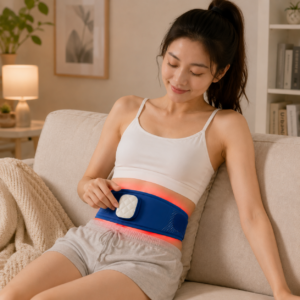
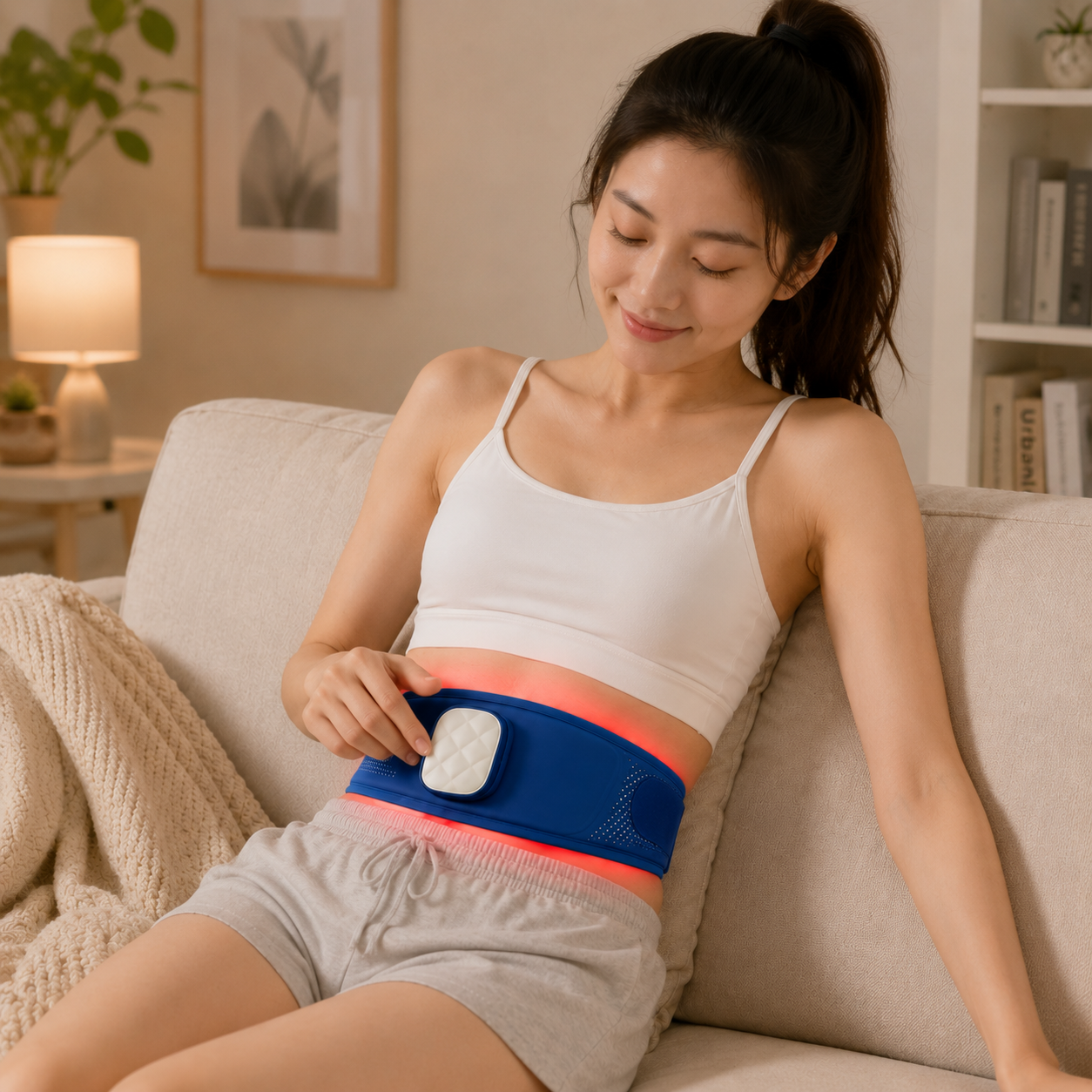
If you have been researching red light therapy products, you have probably noticed one combination appearing again and again: 660nm + 850nm.
660nm + 850nm is popular because it combines visible red light with near-infrared light, giving manufacturers a simple dual-wavelength solution for different application needs.
I see this combination in many red light therapy products, especially belts, panels, wraps, masks, and other wearable devices. But what makes these two wavelengths work well together?
What Is 660nm Red Light?
When I look at 660nm, I see one of the most common wavelengths used in commercial red light therapy products.
660nm is visible red light that is commonly selected for applications focused on the skin and more superficial tissues.
Why Do Manufacturers Use 660nm?
660nm sits within the visible red light range. I can see this light with the human eye, which makes it easy to identify when a device is operating.
I often see 660nm used in beauty and wellness products because it gives manufacturers a familiar red light option.
For example, I can find 660nm in:
- Red light therapy masks
- Red light therapy belts
- Light panels
- Wearable wraps
- Beauty devices
What Should I Consider Beyond the Wavelength?
I would not judge a product only by its 660nm specification.
I also need to look at the optical output and product design.
| Factor | Why I Consider It Important |
|---|---|
| Wavelength | Determines the type of light used |
| Irradiance | Shows the optical power delivered |
| Treatment time | Affects the total energy dose |
| LED density | Affects light distribution |
| Coverage | Determines how much area receives light |
| LED quality | Helps maintain consistent output |
This point is important for B2B buyers. Two products can both use 660nm but still have very different performance.
What Is 850nm Near-Infrared Light?
When I look at 850nm, I am looking at a near-infrared wavelength rather than visible red light.
850nm is near-infrared light that is invisible to the human eye and is commonly used when manufacturers want a longer wavelength for body-focused applications.
Why Is 850nm So Common?
850nm has become a familiar specification in the red light therapy market.
I often see it in products designed for larger body areas, such as:
- Back
- Waist
- Legs
- Arms
- Shoulders
- Other body areas
Unlike 660nm, I cannot see 850nm with my eyes.
This difference also gives manufacturers a simple way to explain a dual-wavelength product:
660nm = visible red light
850nm = invisible near-infrared light
Does 850nm Always Mean Better Performance?
No.
I would not assume that a longer wavelength automatically means a better product.
The final performance depends on several factors, including irradiance, dose, LED configuration, treatment area, and device design.
This is why I always recommend looking at the complete specification instead of focusing on one number.
Why Combine 660nm + 850nm?
This is where the combination becomes interesting.
660nm and 850nm have different characteristics, so combining them allows a device to provide both visible red light and near-infrared light in one product.
How Do the Two Wavelengths Complement Each Other?
I usually explain the combination in a very simple way:
660nm → Visible Red Light → More Superficial
850nm → Near-Infrared Light → Longer Wavelength
660nm + 850nm → Dual-Wavelength Design
The combination gives manufacturers more flexibility when developing a product.
Instead of designing a device around only one wavelength, I can use two wavelengths in the same LED layout.
Why Is This Useful for Product Development?
For a brand owner, a dual-wavelength product can also be easier to position in the market.
A product with both 660nm and 850nm can be described as a more comprehensive red and near-infrared light solution.
This can work particularly well for wearable products.
Is 660nm + 850nm the Best Combination?
I would not call 660nm + 850nm the best combination for every product.
660nm + 850nm is a popular combination, but the best wavelength configuration depends on the product's application, design, target market, and overall treatment parameters.
What Other Wavelengths Are Used?
I can also find other wavelengths in the photobiomodulation market.
For example:
| Wavelength | Light Type | Common Product Use |
|---|---|---|
| 630nm | Red light | Beauty and skin-focused products |
| 660nm | Red light | Beauty and general wellness products |
| 850nm | Near-infrared | Wearable and body products |
I would therefore avoid making a product claim based only on the wavelength.
What Should B2B Buyers Check?
If I were sourcing a red light therapy product, I would ask the supplier for more than the wavelength specification.
I would check:
- Actual wavelength output
- Irradiance
- Energy dose
- LED quantity
- LED spacing
- Treatment coverage
- Working temperature
- Controller settings
- Battery capacity for wearable products
- Product testing and certification
This information helps me compare two suppliers more accurately.
A supplier that simply tells me "660nm + 850nm" has not given me enough information to evaluate the product.
Why Is 660nm + 850nm Popular for Red Light Therapy Belts?
I see 660nm + 850nm especially often in red light therapy belts.
The combination works well for wearable belt designs because manufacturers can place visible red and near-infrared LEDs across a flexible treatment area.
Why Does the Combination Fit a Belt Design?
A red light therapy belt needs to cover a relatively large and flexible area.
I can distribute 660nm and 850nm LEDs across the belt to create a dual-wavelength configuration.
The belt can then be designed for convenient home use while keeping the product lightweight and portable.
What Can I Customize as a Brand Owner?
If I am developing a private-label red light therapy belt, I can usually consider several customization options.
| Customization | Example |
|---|---|
| Wavelength | 660nm + 850nm |
| LED quantity | Based on product size |
| LED layout | Different spacing and distribution |
| Controller | Wired or wireless |
| Battery | Different capacities |
| Fabric | Different materials and colors |
| Logo | Custom branding |
| Packaging | Custom retail packaging |
This is especially useful for B2B buyers because the same basic technology can be developed into different products for different markets.
What Matters More Than Choosing 660nm + 850nm?
I think the most important point is that wavelength is only one part of the product.
A good red light therapy device needs the right combination of wavelength, irradiance, dose, coverage, LED layout, and overall product design.
Why Does Irradiance Matter?
Irradiance tells me how much optical power reaches a specific area.
A product may use the correct 660nm + 850nm combination, but low or inconsistent output can still affect the overall product design.
For this reason, I would ask suppliers for actual test data rather than relying only on marketing specifications.
Why Does Energy Dose Matter?
The total energy delivered also depends on treatment time.
A simple relationship is:
Energy Dose (J/cm²) = Irradiance (mW/cm²) × Time (seconds) × 0.001
This means I need to consider both output and treatment time.
A higher irradiance does not automatically mean that the product is better. I need to look at the complete treatment setting.
What Should I Look for When Choosing a 660nm + 850nm Supplier?
If I am sourcing a red light therapy belt for my brand, I would look beyond the product sample.
I would evaluate the supplier's manufacturing ability, quality control, testing process, customization service, and delivery reliability together with the product specifications.
Questions I Would Ask a Supplier
I would ask:
- Can you provide the actual wavelength test report?
- What is the irradiance of the product?
- How many 660nm and 850nm LEDs are used?
- How are the LEDs distributed?
- What is the treatment area?
- What is the recommended working time?
- What certifications are available?
- Can you customize the logo and packaging?
- What is the MOQ for customization?
- What is the production lead time?
These questions help me avoid comparing suppliers based only on price.
Final Thoughts
660nm + 850nm is popular because it combines visible red light and near-infrared light in one practical dual-wavelength design.
For manufacturers, this combination offers flexibility. For distributors and brand owners, it offers a familiar product configuration that is already easy to understand in the market.
However, I would not evaluate a red light therapy product by wavelength alone.
I would also check irradiance, dose, LED layout, coverage, product quality, testing, and manufacturing capability before making a purchasing decision.